Tuesday, June 13, 2023

Notes from talk on China-US rivalry for Latin America

Notes from talk on China-US rivalry for Latin America

Florida State University - Panama
6-13-2023

Global Tectonic Shifts, Asia and Latin America
Alicia Garcia Herrero
Chief Economist – Asia Pacific

hyperglobalization vs. slowbalization
-Slowbalization – slowing of globalization, increasing fragmentation

The WTO and other international organizations regulating trade have been increasingly ineffective
-Why?
-What can we do about it?

US approval rate for export licenses: China’s % has been dropping fast

FDI and M&A (mergers and acquisitions) are targeted through FDI screen mechanisms
-including outbound investment screening

From de-coupling to de-risking – difference not really clear

EU only wants to talk de-risking not decoupling
EU is looking for a de-risking strategy going forward
EU has trade issues with China like competition over cars and solar panels

Taiwan has elections in January – DPP, KMT, TPP
could be protests

The QUAD
BRICS+

One China Policy (China’s) vs. One China Principle (US – strategic ambiguity)

Bipolarity vs. multipolarity
Poles: EU, US, China Japan, Brazil, Mexico, Saudi Arabia


*China is trying to pull the Global South together, but it may not work
-India is a key pivot point

Will USD remain the main international currency?

RMB used increasingly for trade settlments
Argentina, Brazil, UAE settling trade imports from China in RMB
pay for imports in RMB, get RMB exports is the problem bc they prefer dollars
China can impose its currency for trade because of its major economic power, but that’s different from the renminbization of the world
but no advancement in percent transactions in RMB beyond Chinese loans overseas

India trying to internationalize the rupee, but far off, perhaps after a supercycle 10 years in the future

Al Jazeera – Technological decoupling
https://www.linkedin.com/posts/aliciagarciaherrero_china-activity-6993146762987266050-Jn4W/
-Painful for China

Technology more disruptive than ever
Trying to control tech standards

Structural deceleration
China growth 5% today à projected at 2.3% bv 2035
still reach $25K GDP
Fast-growing public debt will become a burden as growth decelerates
How much innovation can mitigate structural deceleration?

China fertility rates dropped from 2.8% 1980 to 1.7 today

China can ban major companies like Microsoft, make their own ecosystem
Not at same level but can still operate and upgrade
*Ecosystems bifurcation

By 2035 aging will have a major negative impact on China’s labor supply
-currently mitigated by urbanization/rural-to-urban migration – which brings more workers to factory areas

When China makes bold statements they pass through many filters, unlike bold statements by US/Trump
https://www.aljazeera.com/news/2022/6/10/china-tells-us-it-will-not-hesitate-to-start-war-over-taiwan

China’s anti-spy law has decreased the number of expats leaving China
How many Chinese coming across US border?

China’s youth unemployment is 20.4% worse than Spain


China’s investment in Latin America
-Is mostly in transport and energy projects, especially involving SOEs
-Very little FDI in manufacturing to Latin America

In contrast to Latin America, ASEAN and India are well-positioned for more FDI
-Have cheap wages ex. Vietnam
-Manufacturing FDI is rising in India and Vietnam, falling in China

China is not the cause of Latin America’s low % share of global FDI
EU 36% and US 34% are the largest FDI investors in Latin America
China is not among the top 10 in FDI to Latin America

Key point:
China invests in the West, but gives loans to emerging markets
Before the pandemic, China favored the EU; now East Asia and India





Thursday, February 2, 2023

Becoming a ‘Sponge City’ at Shenzhen Speed

 My article explores how Shenzhen, China, where I taught 2016-17, transformed into a Sponge City. It goes into the origins & philosophy of Sponge Cities and concrete flood protection techniques like greenways, permeable pavement, and floodable parks. 
https://thediplomat.com/2023/01/becoming-a-sponge-city-at-shenzhen-speed/

Wednesday, December 1, 2021

Nice piece on the origins of China's Sponge Cities movement

Nice piece on the origins of China's Sponge Cities movement

 https://www.bbc.com/news/world-asia-china-59115753

Great diagram of river flow

So much going on in this diagram of a meander. Downstream flow as well as the heliocoidal flow i.e. corkscrew flow.


Seterra - Good resource for memorizing locations

 Good resource for memorizing locations

https://www.seterra.com/

Another good one is lizardpoint.com

Thursday, October 14, 2021

Ocean currents video

 
The Motion of the Ocean
https://oceanservice.noaa.gov/facts/current.html

Saturday, October 2, 2021

Digital nomads may help resuscitate Spain's small towns

Digital nomads are here to save Spain’s ghost towns
https://www.wired.co.uk/article/spain-startup-act-digital-nomad-visas

Wednesday, September 15, 2021

Check out China's scorecard for giving out A, B, and C level work visas

Check out China's scorecard for giving out A, B, and C level work visas

http://www.china-briefing.com/news/china-work-permits-are-you-a-b-c-tier-talent/

My new article on China's Belt and Road Initiative

My new article on China's Belt and Road Initiative

It focuses on how the BRI will affect Panama, the US, and the rest of the Americas and the world. Also discusses Africa, Asia, and Australia.

Belt and Road Hazards, Coming to the Americas
https://americanaffairsjournal.org/2021/08/belt-and-road-hazards-coming-to-the-americas/


Wednesday, December 2, 2020

Belt and Road and obstacles to development

We were talking in class today about the Belt and Road Initiative (BRI) and how it illustrates a wide range of obstacles to development. Obviously part of the goal of the BRI is to help other countries get infrastructure. But on the China side it helps overcome obstacles to development as well. The BRI illustrates one of the most basic economic obstacles, having to provide resources for the people. China has the largest population in the world, so this is a very difficult obstacle. The BRI is in large part designed as a means to make sure China can supply enough food, natural resources (wood, coal, minerals, etc.), etc. for the future, by setting up a Chinese-controlled transport network around the world that it can use to extract foreign resources and bring them to China. This would be an example of overcoming economic obstacles and also geographic obstacles, because China does not have enough of certain resources ex. wood at home and so it has to get it from other countries ex. Africa. Also, China is using the BRI to trade with new markets and set up factories overseas, because workers in China are demanding higher wages. This overcomes the economic obstacle of GDP growth by establishing new markets.


In another light the BRI is meant to help China's government stay in power and achieve stability, which is a political obstacle - because if China starts running out of resources, they know a revolution could follow. The Chinese Communist Party essentially promises that it will deliver economic progress (GDP growth, employment, etc.) in exchange for being allowed to continue as a one-party dictatorship.

The BRI also helps China overcome social sustainability/social inclusion obstacles. It provides jobs for people from poorer areas of Chinese where there is more unemployment and less development going on, and therefore sort of exports potential social unrest and includes these people economically by moving them overseas ex. to Africa.

The BRI is also overcoming cultural obstacles to development. Until 1980 China was very much a closed, inward-looking country with a failing economy under Mao. Only since then did China begin to allow foreign countries to put factories in China, in the Special Economic Zones (SEZs) established by Deng Xiaoping (a type of free trade zones). And only even more recently did China turn the tables and start going out to invest in foreign countries. This is called the "Going Out Policy" (started in 1999). The BRI is sort of a new extension of the Going Out Policy on a global scale. So in this light, the BRI illustrates how China is just in recent decades has been trying to overcome the obstacle of its long history of disconnectedness i.e. lack of globalization. This includes China's well-known super-rapid economic globalization through manufacturing (Made in China) but also its efforts at political and cultural globalization with its soft power efforts and alliances like the BRICS and the Belt and Road Forum. Today over 130 countries have signed up for the BRI - that's a long way from the isolated China of 1980. So this is a clear example of overcoming, at least to some extent, China's long history of political and cultural isolation and instead moving toward globalization. The key caveat is that China wants to embrace globalization its own way, i.e. with China at the center as opposed to the UN and the West. Who knows if this is possible, but in any case the BRI is helping it overcome economic, cultural, political, social, and geographic obstacles.

Saturday, June 6, 2020

Flows of Enlightenment ideas to Latin America

Never seen a map like this before, and I've seen a lot of maps. Geographic flows of ideas of Enlightenment ideas to Latin America.
I have actually noticed that Benjamin Franklin is quoted often in the Spanish-speaking world for some reason.


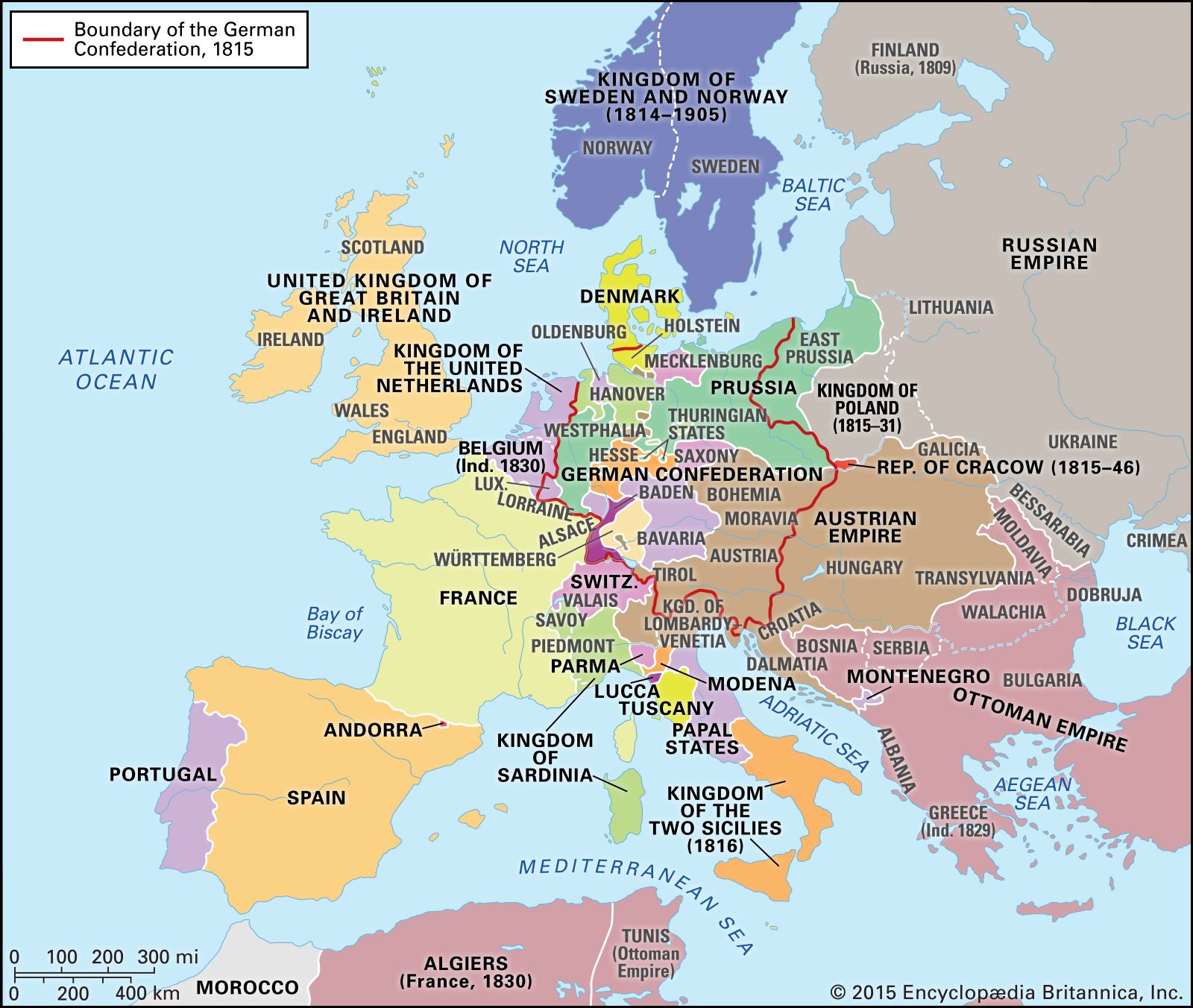
Nation states vs. dynastic or composite states - Congress of Vienna

Michael Rapport of U of Glasgow makes a good distinction between nation states vs. dynastic or composite states in the course of discussing the Congress of Vienna.

This is very helpful, because the map of Europe at the time of the Congress of Vienna can be confusing - it was to me - if looked at with the idea of nation states that we are more familiar with in the modern world. For example, I asked myself how can the German Confederation (red line) exist if it's also half of the Austrian Empire? Turns out the Austrian Empire contains eleven different nationalities under one emperor, i.e. it is a "composite state," not a nation state.

He also mentions the concept of raison d'etat = the ruler's duty to expand the wealth, power, and status of his or her state and dynasty. In other words, might, status, and prestige were what mattered, not which peoples belonged to which state. Peoples could be traded or annexed to help the power of a particular state.

This is why the 1700s were a century of endemic warfare, because states were constantly competing for territory. Some examples are the seizing of Silesia from Austria by Prussia and the annexing of parts of Poland by Prussia, Austria, and Russia until it was wiped off the map in 1795.

But it was also believed that Europe was a family of states that could pull together when necessary. For example, if one state threatened to dominate all the others, it was the duty of the others to stop it.


Congress of Vienna - Decisions of the congress | Britannica

Sunday, April 26, 2020

France in Africa


Africa's French Problem - TRT World
https://www.youtube.com/watch?v=l5Lk3pv20SY

Thursday, April 23, 2020

How China Sees the World


How China Sees the World
https://www.theatlantic.com/magazine/archive/2020/05/mcmaster-china-strategy/609088/

Sunday, April 19, 2020

A great lecture

A great lecture by Harm de Blij, the great author of many geography textbooks

Why the U.S. Has Become the World's Most Geographically Illiterate Society of Consequence (2005)
https://www.youtube.com/watch?v=s7eLiBMbkjg

Harm de Blij's recommendations

Listing here books recommended by Harm de Blij in this video

The Real Eve by Stephen Oppenheimer

The Little Ice Age by Brian Fagan

1421: The Year China Discovered America

Democratic Ideals and Reality by Alfred Mackinder

Geography the "must-have A-Level"

The Guardian view on geography: it’s the must-have A-level

https://www.theguardian.com/commentisfree/2015/aug/13/the-guardian-view-on-geography-its-the-must-have-a-level

Friday, April 17, 2020

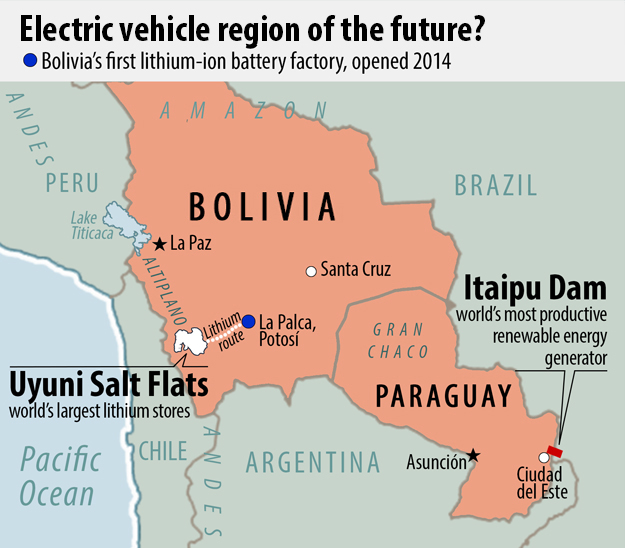
Electric Vehicle Manufacturing Holds Unique Potential for Bolivia and Paraguay


Electric Vehicle Manufacturing Holds Unique Potential for Bolivia and Paraguay
https://www.earthisland.org/journal/index.php/articles/entry/electric_vehicle_manufacturing_potential_bolivia_and_paraguay/

by Robert C. Thornett

Electric Vehicle Manufacturing Holds Unique Potential for Bolivia ...

Electric Vehicle Manufacturing Holds Unique Potential for Bolivia ...